Opportunity
Approach
External Collaborators
AI for Accelerating Clinical Research. As AI and automation make it easier to generate medical evidence, the harder problem becomes reviewing and analysing it carefully enough to act on. Today that work is slow. A systematic review, the standard way of gathering everything known about a clinical question, takes over a year and more than 1,000 hours of expert time, and many are already out of date by the time they are published. The statistics behind clinical studies are just as fragile: small decisions about how the data are analysed can change the conclusions, and those decisions are often hard to check or repeat.
Brad is building AI co-scientists to help with this work: systems that can read and weigh the published literature, pull together data from many studies, and run and check statistical analyses, keeping a clear trail back to the evidence behind each result. Clinical research is a hard test for these tools, because the stakes are high and the reasoning has to hold up to scrutiny. A central part of the project is studying how doctors and researchers actually work alongside these systems, and what it would take to rely on them for decisions as consequential as clinical guidelines and health policy.
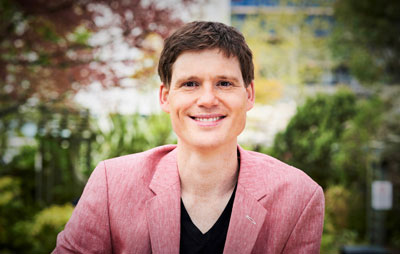
Brad is a clinician, biomedical engineer, and currently a Rhodes Scholar at the University of Oxford, where he is a DPhil candidate at the Institute of Biomedical Engineering. He previously practiced in South Africa's public healthcare sector. He has co-founded multiple health-technology ventures and led the development of a patient analytics platform tracking chronic conditions for over 2 million patients. He serves as a commissioner on the Lancet Commission on AI and HIV and as a founding editorial board member for Digital Health & AI at the BMJ. He holds an MBBCh and MSc in Biomedical Engineering from the University of the Witwatersrand, where he studied medicine and engineering simultaneously. He has been recognised on the Forbes 30 Under 30 list for his work in healthcare and science. Brad seeks to build AI systems that will make healthcare more reliable, accessible, and preventative with a particular interest in resource-constrained settings.







.jpg)