Opportunity
Approach
Ecosystem Catalysis
The most pressing challenges of our time, from decarbonising transport and scaling renewable energy to designing safer vehicles and more resilient infrastructure, will be solved using simulation. Yet high-fidelity simulation takes hours or days, limiting how fast engineers can innovate and how extensively they can explore the design space. Physics AI is helping to bypass compute bottlenecks through the development of surrogate models, but they remain domain- and task-specific, and fragile outside their training distribution.
Foundation models are the next frontier in the physics AI space. Unlike language, physics can draw on centuries of scientific knowledge. The behaviour of seemingly different physical systems across space and time can be described by shared physical principles such as conservation laws, symmetries and thermodynamic constraints, underpinned by geometric structures. This project aims to exploit these naturally generalisable structures to build a foundation model capable of transferring knowledge across geometries, physical regimes and, ultimately, physical domains.
This project contributes to the Mathematics for Safe AI Opportunity Space: building mathematically robust, human-auditable models that comprehensively capture the physical phenomena and social affordances that underpin human flourishing. The proposed physics foundation model is a world model at the core that encodes geometry, symmetries and conservation laws directly into the structure to ensure physical consistency by construction. The structure-preserving approach yields a foundation for trustworthy PhysicsAI simulation rather than black-box prediction.
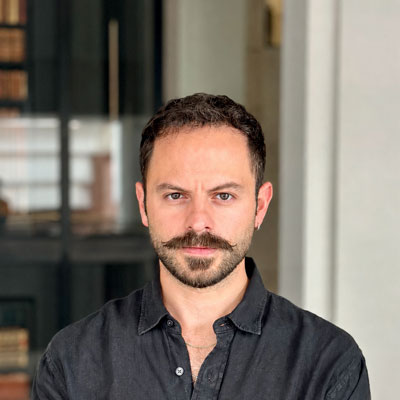
Zack is a multidisciplinary researcher focused on how physical knowledge is represented and encoded in machine learning models of physical systems. Prior to joining The Alan Turing Institute as a Turing Research Fellow, he practiced as a chartered architect and civil engineer, and held research positions at Cambridge and Harvard. He earned his PhD in Engineering Design Computing from the Singapore University of Technology and Design (2019), where his thesis developed explainable surrogate models for interpreting simulation of complex engineering problems, alongside projects in computational design and additive manufacturing. His recent industry work centres on surrogate modelling, developing tools for naval architecture and advising on physics AI for corporates like Jaguar and Land Rover in the automotive sector.


.jpg)