The Work
Mishra framed turbulent mixing in stratified shear flow as a decision problem and used a model-free actor-critic algorithm to search for forcing strategies that maximise a turbulent flux coefficient.
What Worked
The learned policy achieves 20% better mixing than a random strategy at the same level of energetic forcing.
What Has Been Achieved
Working in a 2D simulated flow with a deliberately low-dimensional action space for tractability, the learned strategy improved mixing by 20% over a random policy at the same energy budget. She released fluidframe, an open codebase for reinforcement learning in fluid environments.
What Was Learned
Apparent training instability turned out to be an artifact of partial observability; the fix came from reinforcement-learning expertise, not from AI hypothesis tools.
About
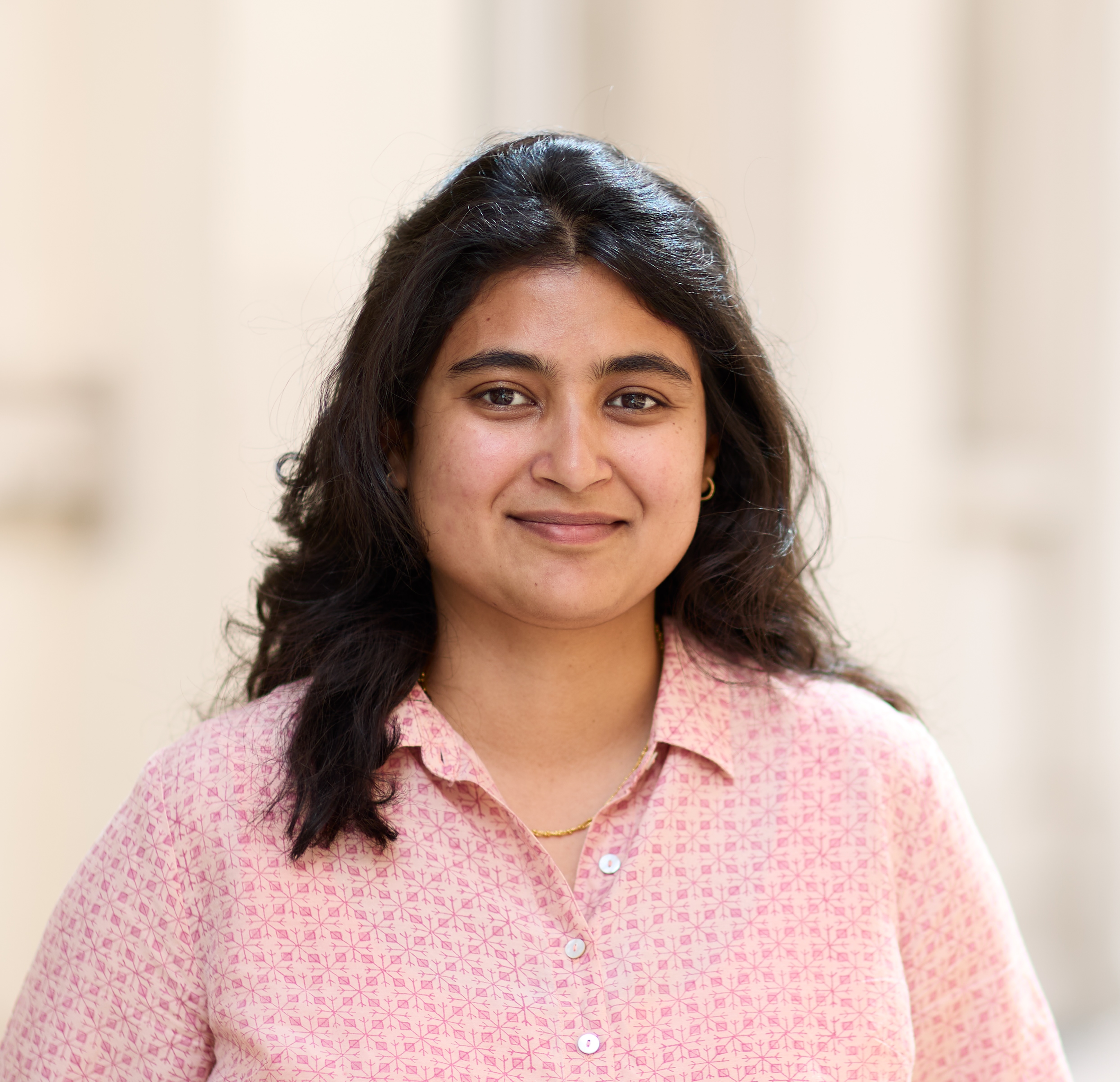
Shruti is a multidisciplinary scientist with expertise in reinforcement learning and continuum mechanics. Prior to Cambridge, she worked as a Research Scientist at Sony AI, developing methods for PlayStation games and open-source domains. She earned her PhD in Applied Mathematics from Harvard University (2021), where she focused on continuum mechanics, computation, and machine learning. Her research interests span from reinforcement learning in continuous control environments to fluid mechanics and computational methods.
Lab & Advisors
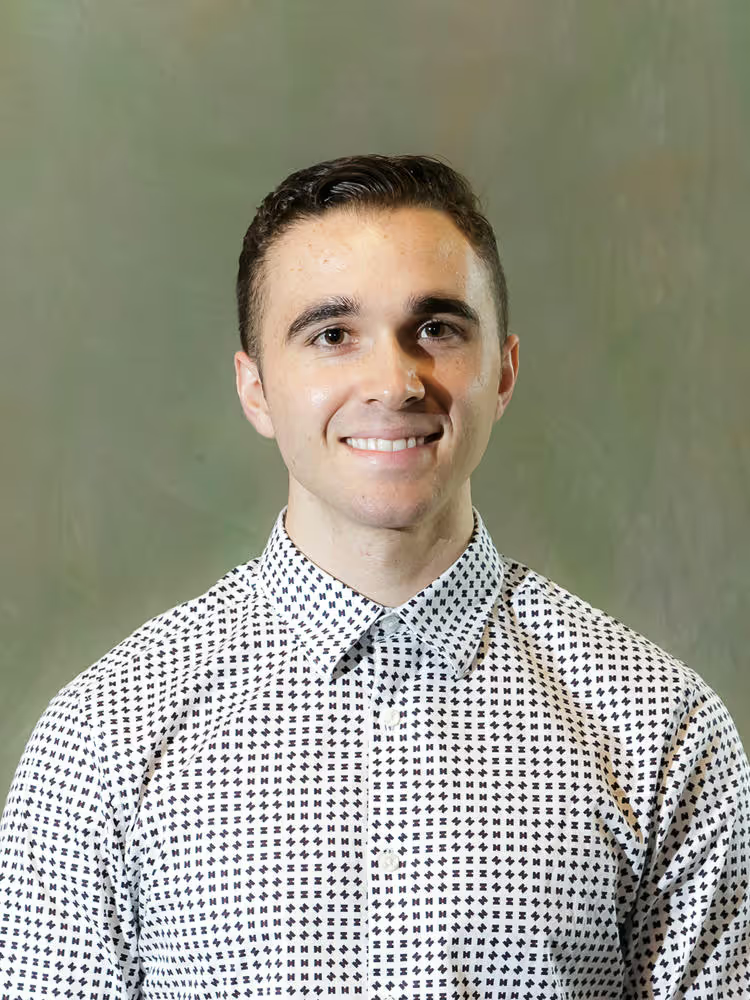
Miles Cranmer
University of Cambridge
Assistant Professor of Data Intensive Science at University of Cambridge
Miles Cranmer is a faculty member at the University of Cambridge in the Department of Applied Mathematics and Theoretical Physics, the Institute of Astronomy, and the Kavli Institute for Cosmology. His lab advances AI-driven discovery in the physical sciences, and he leads the machine learning module of Cambridge’s MPhil in Data Intensive Science. Miles co-founded PolymathicAI, an international collaboration building large-scale foundation models for scientific data, and his group develops an ecosystem of open-source tools, such as PySR, which are used widely across the sciences. Before moving his group to Cambridge, he spent time at Princeton University, Google DeepMind, and Flatiron Institute.