The Work
Li reframed the recovery of individual motor-neuron spike trains from muscle recordings as a next-spike-token prediction problem, building MUformer. This autoregressive transformer reads raw EMG with no classical preprocessing or per-session calibration.
What Worked
MUformer outperformed state-of-the-art CNN methods by ~10% in end-to-end neural drive estimation and ran live from implant to real-time cursor control.
What Has Been Achieved
Trained on a biophysical simulator plus twenty hours of human recordings, it beat a state-of-the-art CNN, and he drove the full chain end to end, fabricating a thin-film implant and wireless microcircuit to achieve live two-degree-of-freedom on-screen control.
What Was Learned
Cross-session accuracy dropped, and with few participants, the binding limit is ground-truth data and hardware iteration speed, not model design.
About
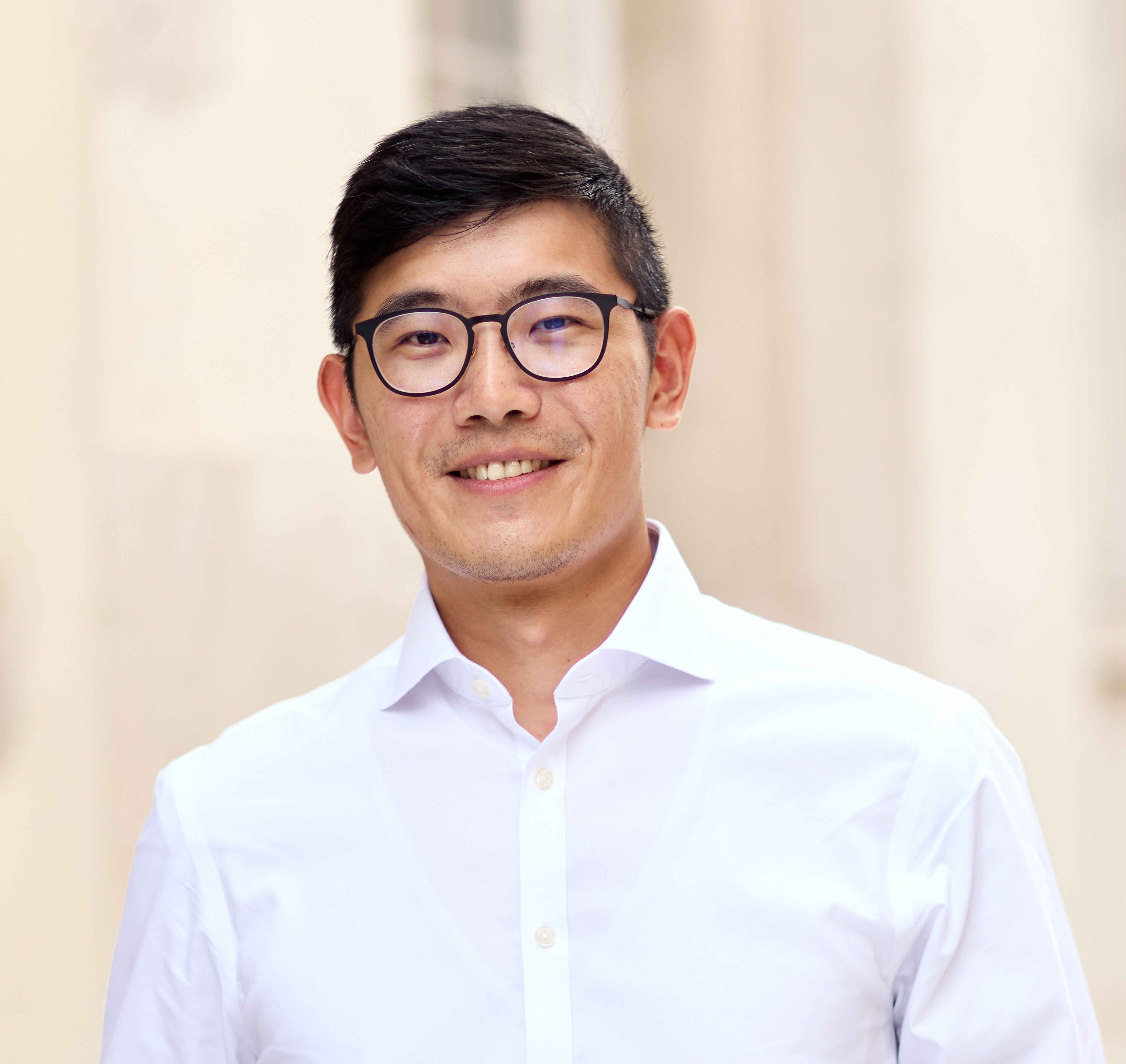
Bryan is completing his PhD in Biomedical AI at the University of Edinburgh, and his research interest lies in NeuroAI — the intersection between computational neuroscience and artificial intelligence. His PhD research focuses on building digital twins of the mouse visual cortex, AI models that accurately predict neuronal responses to visual stimuli. In addition to his postgraduate studies, Bryan gained experience interning and working at organisations including Microsoft Research, The Alan Turing Institute, Johnson & Johnson, Huawei Noah’s Ark Lab, and AMD. (Personal website: https://bryanli.io)
Lab & Advisors
Dario Farina
Imperial College London
Chair in Neurorehabilitation Engineering, Department of Bioengineering
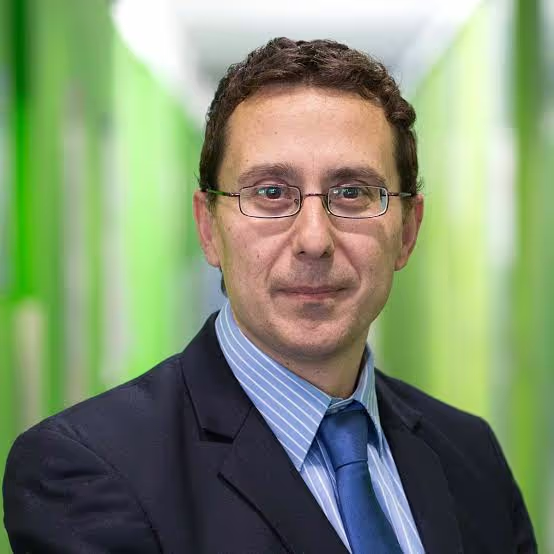
Dario Farina leads the Neuromechanics and Rehabilitation Technology group, conducting fundamental research in motor neuroscience and the translation of scientific knowledge into neurorehabilitation technologies. He is renowned for his research combining signal
processing, neurophysiology, clinical sciences, and robotics, to
investigate the neural control of human movements and to develop
assistive technologies. His research has been translated into several medical technologies as well as in human interfacing for consumer electronics applications. He is an advisor for human interfacing for Meta (Facebook Reality Labs) and several other companies.